Duskgild · Field notes
Skull Ring Meaning
A skull ring isn't morbid. For five hundred years the skull has meant the opposite of doom — memento mori, remember you must die, worn as a reminder to spend the time you have. Here is where that reading comes from, and how to wear it now.
This is a short account of what the skull has meant on a hand — from Renaissance mourning rings to the coffin bands of now — told straight, with the pieces we make in solid sterling silver.
What a skull ring means
- Memento mori. The main reading. Latin for remember you must die — not a threat but a prompt: the time is finite, so use it. Carved on tombs and set into rings for centuries.
- Protection and defiance. A skull worn openly stares down the thing everyone else looks away from. It reads as nerve — a boundary set in bone.
- Remembrance. Mourning rings put a skull on the hand to keep a name close. Grief worn quietly, not hidden.
- A leveller. The skull beneath every face is the same. Under all rank and fortune, one shape — which is why the symbol has never belonged to any single class or creed.
A short history, told straight
The skull as a keepsake is older than the goth shelf by a long way. Renaissance and Tudor memento mori rings set enamelled skulls into gold and were worn by the devout as a daily reminder of mortality. By the Georgian and Victorian eras the skull had moved into mourning jewelry — rings, lockets, and brooches that held a lock of hair and a death date, so the dead stayed on the hand.
The still-life painters gave the symbol its other home: a skull set beside a guttering candle and a wilting bloom, the vanitas — all of it passing, so attend to what lasts. Only much later did the skull pick up its outlaw reading, through flags, rock, and the biker shops. None of those replaced the older meaning; they just added a louder register on top of it.
The symbol never needed reviving because it never left. A skull ring today can carry any of these readings — devotion, memory, nerve, or the plain memento mori — or none, worn simply because the shape is good.
Memento mori: the reading under the bone
If a skull ring has one core meaning, this is it. Memento mori is a discipline, not a mood: hold the fact of the ending in view and it sharpens the middle. Our flagship, the Vigil Signet ($295, is built on exactly that idea — a skull beneath a crescent of black pavé and a single lab-created opal, oxidized so the dark sits in the recesses and the dome polishes bright with wear. For the fuller tradition — the candle, the hourglass, the mourning ring — see our note on memento mori jewelry.
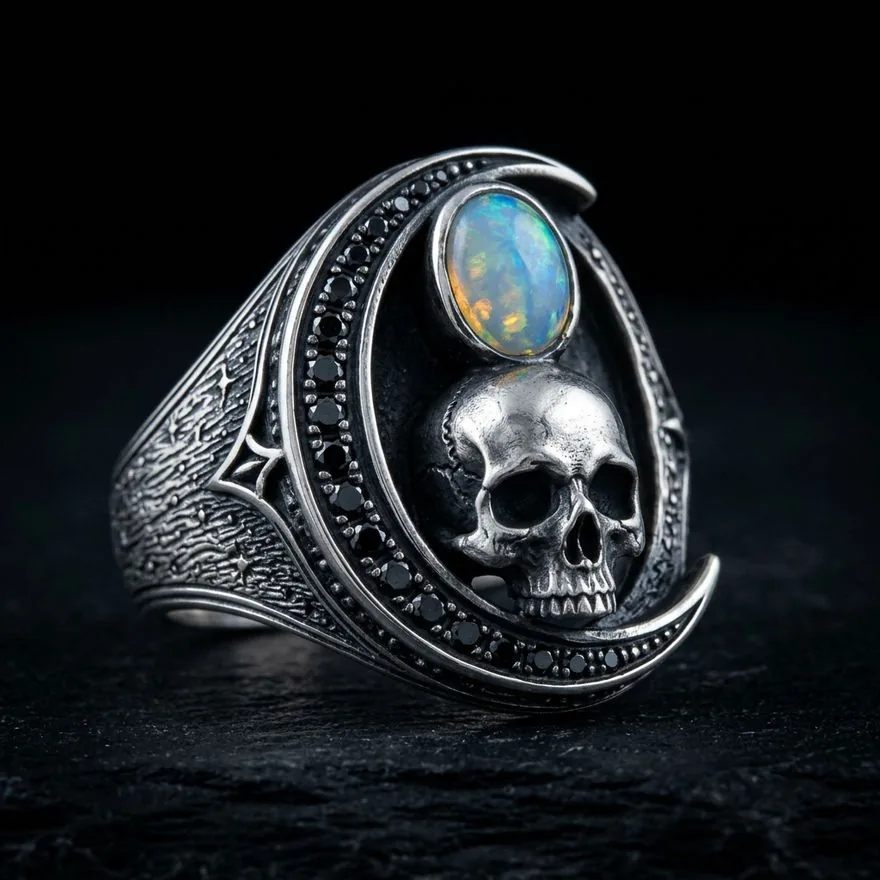
Vigil Signet
925 silver · lab-created opal · black pavé · $295
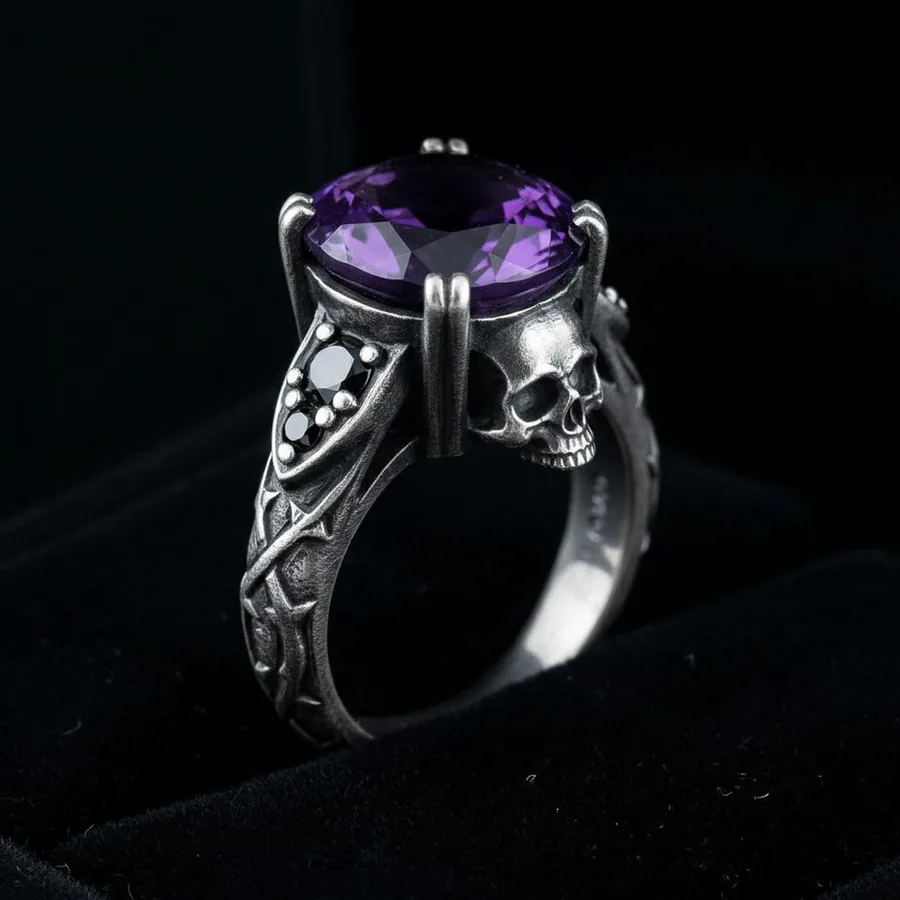
Sovereign
925 silver · lab-created purple stone · black pavé · $295
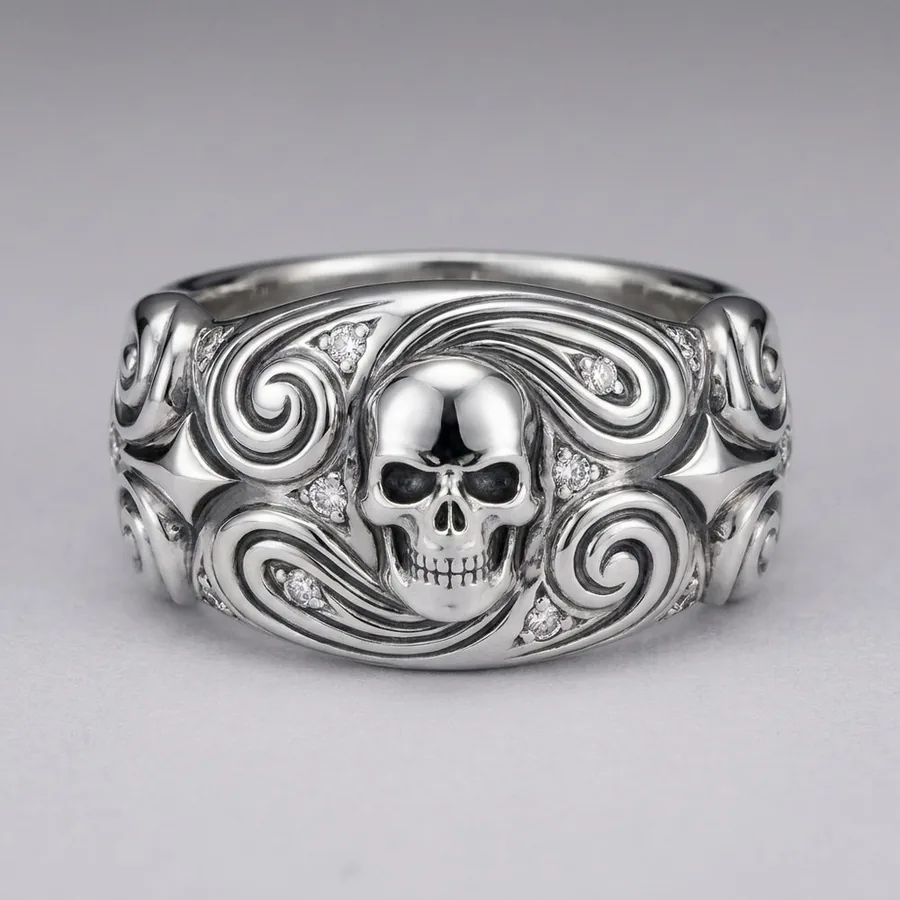
Undertow
925 silver · white pavé · wide band · $295
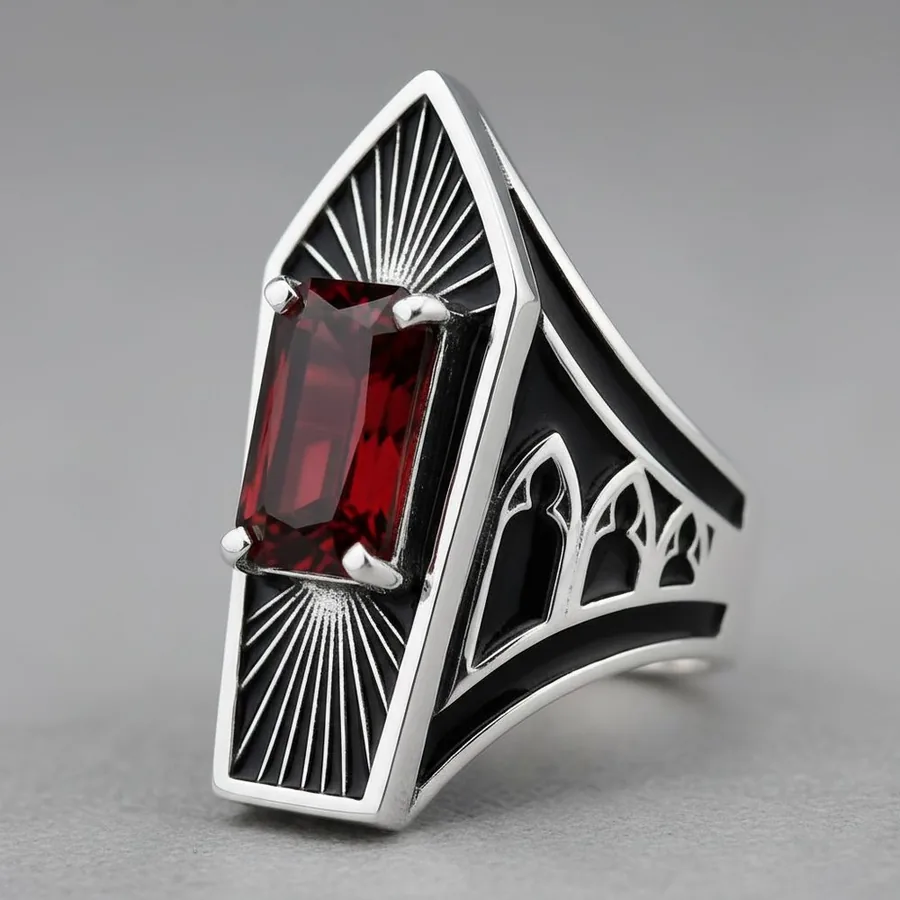
Requiem
925 silver · black enamel · lab-created ruby · $275
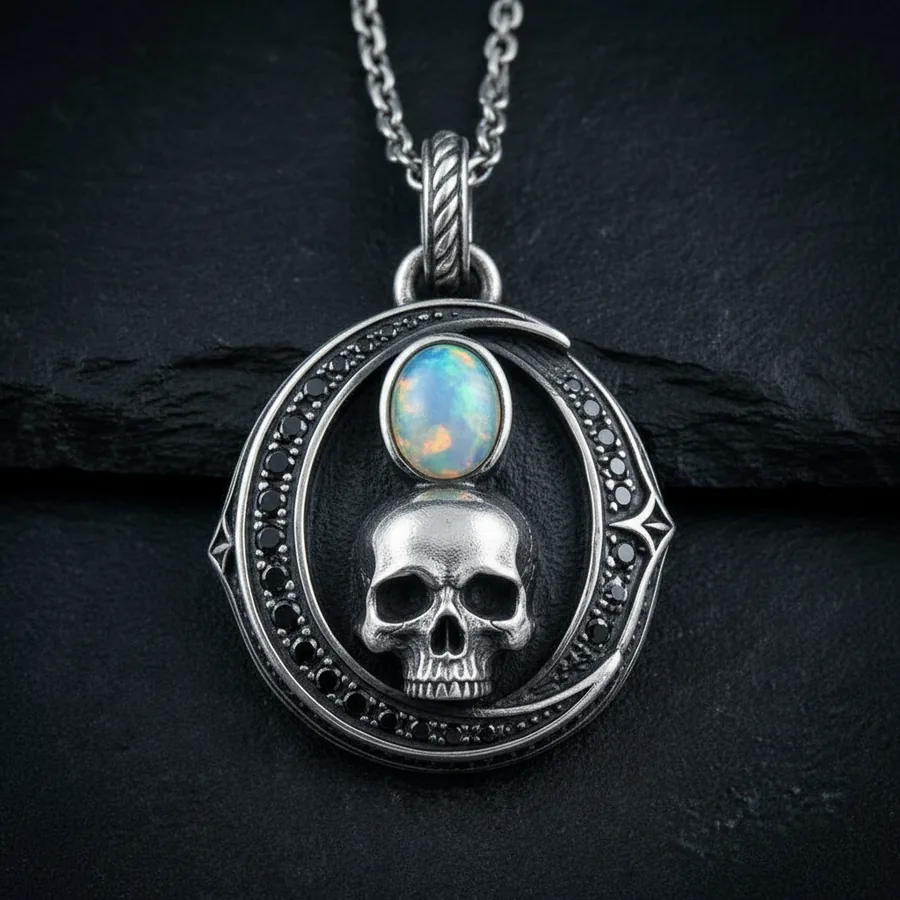
Vigil Pendant
925 silver · lab-created opal · chain included · $295
The coffin ring
Where the skull suggests the end, the coffin names it. A coffin ring carries the same memento mori idea in a plainer shape — the outline everyone recognises, worn small on the hand. Requiem ($275 sets an emerald-cut lab-created ruby over engraved rays in a black-enamel coffin, cathedral arches through the shoulders. Read now, a coffin band is less mourning than honesty: a small, plain acknowledgement that time is finite, so this is the ring that tells you to get on with it.
Wearing a skull ring
The house rule holds: one dark thing, worn plainly. A signet-style skull like the Vigil Signet sits face-out on the little finger or ring finger; a wide band like Undertow wants the index or middle finger, where its weight reads as intended. Oxidized sterling stays quiet at arm's length and sharp up close — exactly the register a skull wants. Every skull piece is made in whole US sizes 2 through 13; the rest of the dark shelf lives in the gothic rings collection.
Common questions
What does a skull ring mean?
Most often, memento mori — Latin for remember you must die — worn not as morbidity but as a reminder to live while there is time. It also carries older readings: protection, defiance, and remembrance of someone gone.
Is it bad luck to wear a skull ring?
No. The skull's long history runs the opposite way — it is a memento mori, a prompt to value the time you have. Any darker reputation comes from film and fashion, not from the symbol's roots.
What does memento mori mean?
It is Latin for remember you must die. For centuries it was carved on tombs, painted into still lifes, and set into rings and lockets — a quiet reminder to spend life well because it ends.
What does a coffin ring symbolize?
The same memento mori idea in a plainer shape: the coffin names the end directly. Worn now, it reads less as mourning than as an honest acknowledgement that time is finite.
Which finger should a skull ring go on?
There is no rule. A signet-style skull sits naturally on the little finger or ring finger, face out; a wide skull band wears well on the index or middle finger. Choose the hand you will notice it on.
Are skull rings only for men?
No. Skull and memento mori jewelry has been worn across genders since the 1500s, in mourning rings, signets, and lockets. Ours are made to order in whole US sizes 2 through 13, for any hand.
Skull and coffin rings, made to order
Every piece is cast in solid 925 sterling silver only once you order it — most ship in 3–4 weeks, intricate casts up to 5 — free US shipping.
See the gothic rings Enter the shop