Duskgild · Field notes
Choosing an Alternative Engagement Ring
Some proposals were never going to end in a catalog solitaire. If the person you're asking wears leaves, moons, color, or black, the ring should say so. This is a plain guide to choosing one that does — without giving up any of the things an engagement ring is for.
What follows: what "alternative" actually means, how to choose by color, the truth about lab-created stones and gilded metal, the dark option, and the timing that makes a made-to-order proposal work.
What counts as alternative
Anything the mall case wouldn't stock: a colored center stone instead of a white diamond, a band that grows leaves or winds like a vine, oxidized silver instead of bright gold. None of it makes the ring less of an engagement ring. It's still made in their size, still built for daily wear, still meant to outlast the day you ask.
What changes is only this: the ring is chosen for the person, not the convention.
Start with color
The fastest way in is the color they already wear.
- Blush and champagne. Seraphine ($285) — a lab-created blush stone in rose-gold gilding, made to be asked with.
- White, with a twist. On Sylvan ($295) the lab-created white sapphire rises out of hand-veined leaves — pear or marquise, your choice of cut.
- Lavender. Wisteria ($285) — a pale lab-created lilac stone, quiet and strange in the best way.
- Deep red. Amaranth ($295), a lab-created ruby flanked by lab-created white sapphires — or Sanguine ($285), a lab-created red stone deep as spilled wine for the darker hand.
- Green. Nightshade ($285) — a lab-created green stone deep as bottle glass, ringed by gothic arches.
- Pink. Damask ($285) carries a lab-created pink stone between graduated white accents on a slim gilded band.
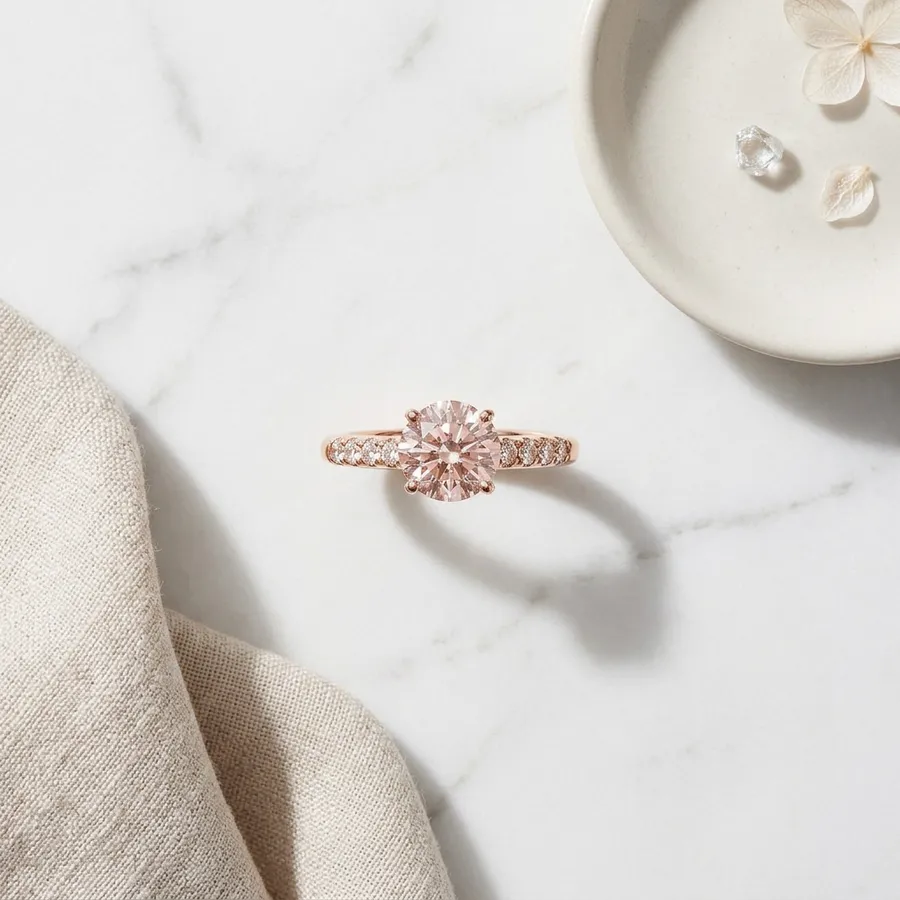
Seraphine
925 silver · rose-gold gilding · lab-created blush stone · $285
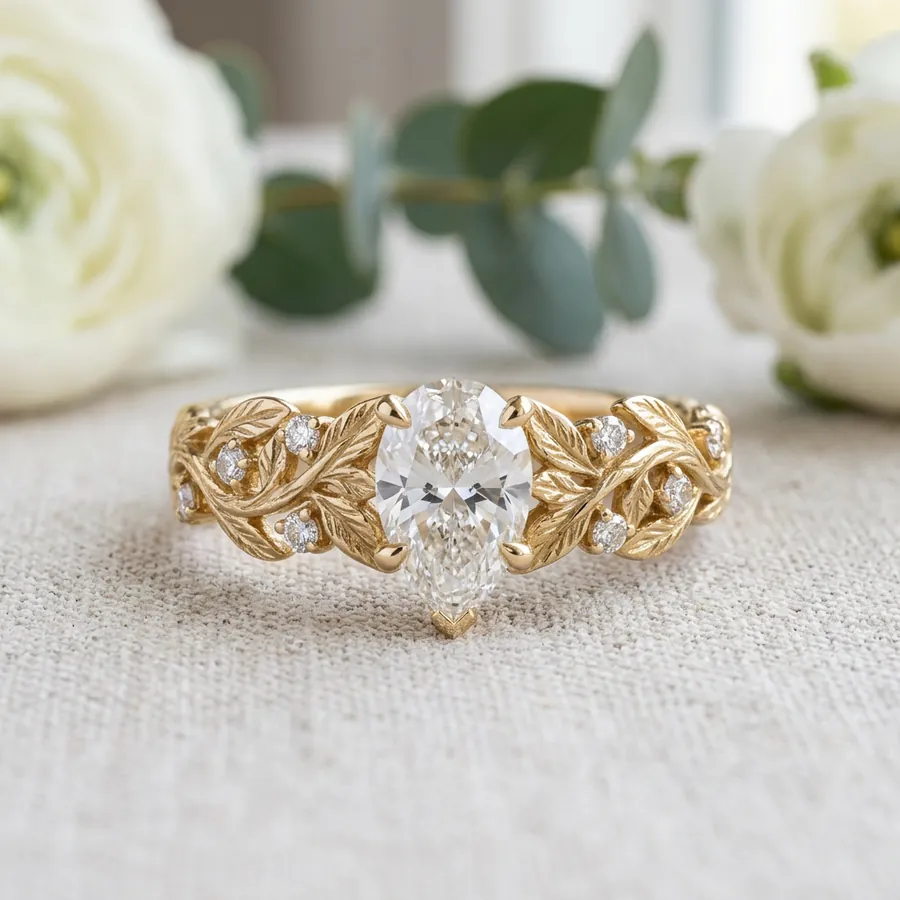
Sylvan
925 silver · gold gilding · lab white sapphire · $295
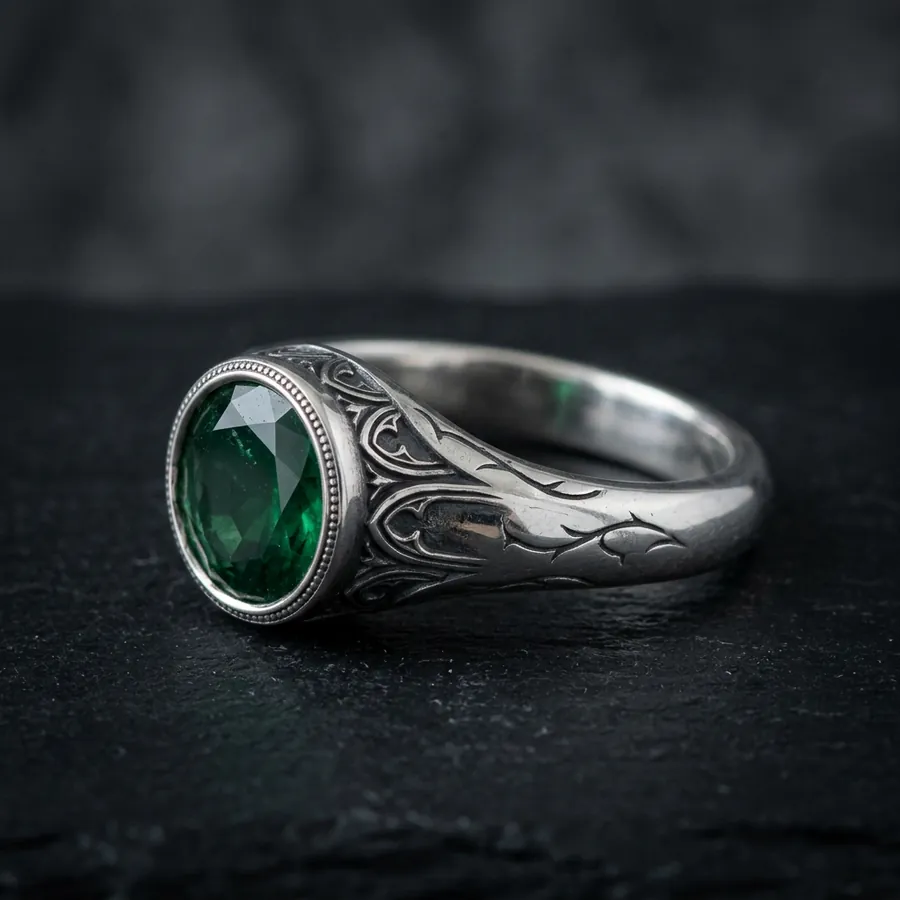
Nightshade
925 silver · lab-created green stone · oxidized · $285
Lab-created stones, plainly
Every stone in these rings is lab-created, and each listing says so. A lab-created sapphire is sapphire — the same material, grown instead of mined — with cleaner origins and consistent color from one piece to the next. Where a design uses cubic zirconia accents, the listing says that too.
It's also the honest half of why these rings cost hundreds instead of thousands. You're paying for solid metal and the making, not for a mined stone's markup.
The metal, honestly
Every ring is cast in solid 925 sterling silver. The gold ones are gold or rose-gold gilding — plating over that sterling — and we never call it anything else. Some designs, like Sylvan, can be left in polished silver instead. The dark pieces are oxidized by hand, the blackening settled into the recesses where it belongs.
The dark option
For the couple who'd never choose the usual one, the dark register carries rings that work both shifts: Nightshade and Sanguine are statement rings by day and gothic engagement rings the moment you ask. The rest of that shelf is in the gothic rings collection.
Size and timing, told straight
Rings are made in the wearer's size, US 2 through 13. If you're asking as a surprise, borrow a ring they wear on that finger and have it measured — any jeweler will do it in a minute. Then count backward from the day: every ring is made after you order it — most ship in 3–4 weeks, intricate casts up to 5 — plus shipping. Order about six weeks out, eight for an intricate cast. US shipping is free, and everything runs through our Etsy shop with buyer protection and a 30-day return policy.
And the band, later
When the wedding comes, the Evermore his-and-hers thorn set is built to sit beside a dark engagement ring — two bands that echo each other without matching. The full bright shelf is in the engagement rings collection.
Common questions
Is an alternative engagement ring a "real" engagement ring?
Yes. The ring is the promise, not the catalog page. An alternative engagement ring is simply one chosen for the person instead of the convention — made in their size, meant for daily wear, meant to be kept.
Are lab-created stones real?
Yes — a lab-created sapphire is sapphire, grown instead of mined. The material is the same; the origin is cleaner and the price is honest. Every stone in these rings is lab-created, and each listing says so.
Is sterling silver durable enough for an engagement ring?
Yes, with honest expectations. Solid 925 sterling silver can be repaired years later, and a size change is a recast away. It will pick up the small marks of daily wear — most people come to like that on a ring worn for a promise — and oxidized finishes are meant to age rather than stay pristine.
Is the gold real gold?
It's gold or rose-gold gilding — plating — over solid 925 sterling silver, and we never sell it as anything else. The silver underneath is real and solid; the gold is a finish.
How far ahead of the proposal should I order?
About six weeks to be safe, eight for an intricate cast. Every ring is made after you order it — most ship in 3–4 weeks, intricate casts up to 5 — and then it ships, free in the US.
What if I get the size wrong?
A plain sterling band can sometimes be resized later, but stone-set and oxidized pieces are hard for a local bench to alter, so measure first. Orders run through our Etsy shop with a 30-day return policy. Better still: borrow a ring they wear on that finger and have it measured before you order.
Made to be asked with
Every ring is cast in solid 925 sterling silver only once you order it, in their size. See the collection, or have something designed for the two of you.
See the engagement rings Enter the shop